起步喔:把出國要比的票、交通、行程整理成一頁,看完就能決定。
CHEAPUNO guide
Does AI quality hide skill gaps in revisions?
Check if drafts fix core issues before polishing, as clients detect shallow fixes that fail quality control standards.
Cover

Photo: StockSnap (CC0)
Spotlight
PAGE: https://alison.com/course/introduction-to-quality-control-tools
PROMISE: Standardize AI output checks using formal quality control metrics and sampling plans.
WHO: Operations managers and quality leads who need to integrate AI outputs into formal quality systems.
WHYNOW: AI integration is expanding faster than standard quality protocols, creating a gap in measurement methods.
DESC: Learn about the quality control tools used for data collection and interpretation, components of six sigma, as well as various ways to assess service quality.
BEFORE: AI output checks rely on ad-hoc human judgment rather than statistical evidence.
BEFORE: There is no standardized method to quantify the consistency of AI-generated content.
BEFORE: Quality improvements are reactive and lack a formal management structure.
AFTER: AI output checks use acceptance sampling plans to make data-driven pass or fail decisions.
AFTER: Process capability indices provide a measurable standard for comparing AI model consistency.
AFTER: Quality improvements follow the structured components of six sigma management.
GAIN: A statistical framework for acceptance sampling applied to AI output batches.
GAIN: Metric-driven capability analysis to measure AI process consistency.
GAIN: Structured understanding of six sigma components for quality management.
STEP: Manual review of AI text feels subjective and lacks a clear pass/fail threshold. || Explain the concept of acceptance sampling and sampling plans || Apply statistical sampling rules to decide when an AI output batch passes or fails quality checks.
STEP: Inconsistent accuracy rates across different AI models make comparison difficult. || Explain the concept of process capability analysis and the capability index || Calculate capability indices to quantify how consistently each AI model meets output specifications.
STEP: The team struggles to define what constitutes a high-quality output for service benchmarks. || Discuss the concept of six sigma and the components of six sigma || Map AI quality defects to six sigma components to establish a structured improvement framework.
NOTFOR: Teams that do not need statistical process control and prefer simple rule-based filters.
NOTFOR: Learners who require practical coding or prompt engineering techniques rather than quality theory.
FACT: Average duration: 4-5 Hours (Contains Video)
FACT: CPD-accredited certificate available
FACT: Advanced level
COVERS: Identify the seven quality tools used to aid data collection and interpretation
COVERS: Explain the concept of acceptance sampling and sampling plans
COVERS: Discuss how to operating the characteristic curve for proportions
COVERS: Discuss the concept of a sampling distribution and process distribution
COVERS: Explain the concept of process capability analysis and the capability index
COVERS: Discuss the concept of six sigma and the components of six sigma
COVERS: Identify some current issues in quality management
COVERS: Discuss the definition and structure of quality function deployment
COVERS: Explain the facilities layout under strategic resource organization
COVERS: Identify the advantages and disadvantages of product layouts
COVERS: Explain line balancing under designing product layouts
MODULE: Service Facility Layout || 7 QC Tools | Acceptance Sampling | Process Capability
MODULE: Maintenance Management || Six Sigma | Some Current Issues in Quality Management | Facility Layout | Group Technology and Facility Layout | Layout Design and Precedence Diagram
What you are probably seeing
You see client trust erode when consistent AI outputs pass initial briefs but fail under detailed review, leaving you to redo work rather than refine it.
Your revision cycles lengthen because the underlying problem is not addressed in the first pass, forcing you to manually verify every detail the model glossed over.
Why it happens
AI prioritizes surface-level completion over structural integrity, so outputs look finished but miss the specific technical or narrative flaws that experienced clients notice immediately.
Without manual skill mastery, you lack the intuition to spot subtle errors, leading to a workflow where you depend on the tool until it produces a result that looks acceptable but is fundamentally flawed.
What changed recently
Step by step
1. List the specific technical requirements or narrative goals that must be met in your next project before opening any AI tool.
2. Draft the core solution manually or without AI assistance to establish a baseline for quality and depth.
3. Run the AI output and compare it side by side against your manual baseline to identify where the automation missed key details.
4. Ask a peer or client to review the final draft specifically for structural flaws rather than style or tone.
5. Document which parts of the workflow required manual intervention and integrate those checks into your standard operating procedure.
Ways to go further
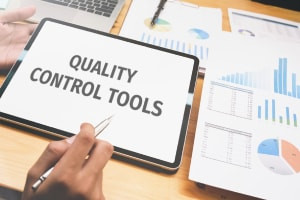 Start here: Introduction to Quality Control Tools For when you need to standardize how you check AI output against quality benchmarks. Open the free course on Alison ↗
Affiliate links: CHEAPUNO may earn a commission if you buy through them, at no extra cost to you.
Other problems readers raise
How to start coding in VS Code without manual setup
How to find remote jobs without visa requirements?
Why does my resume disappear into the ATS void?
Do you need structured prompts or simple queries for LLMs?
How to break complex LLM coding projects into subcomponents?