起步喔:把出國要比的票、交通、行程整理成一頁,看完就能決定。
CHEAPUNO guide
Should I choose Shopify modules or Magento custom code for growth?
Compare the long-term maintenance risks of modular platforms versus deep custom builds to ensure your tech stack supports your expansion strategy.
Cover

Photo: StockSnap (CC0)
Spotlight
PAGE: https://alison.com/course/product-strategy-to-grow-your-business
PROMISE: Aligns deep Magento customization with a product roadmap and MVP strategy
WHO: Founders and product managers planning long-term platform customization
WHYNOW: Strategic planning must precede heavy technical investment to avoid wasted effort
DESC: This entrepreneurship course explains how to use product strategy and practices to attract customers and investors and turn your business ideas into profit.
BEFORE: Customization efforts lack a clear business strategy
BEFORE: Launch timing feels arbitrary and risky
BEFORE: Investor pitches miss key financial requirements
AFTER: Customization aligns with a documented product roadmap
AFTER: Launches follow validated MVP guidelines
AFTER: Investor communications address core requirements
GAIN: A clear link between Magento technical depth and product vision
GAIN: A structured process for launching custom features at the right time
GAIN: Insight into investor expectations that supports your growth strategy
STEP: You stall when mapping Magento features to long-term investor expectations || Discuss the ‘product roadmap’ and its importance || You build a timeline that ties custom Magento modules to specific business milestones
STEP: You over-engineer early features before validating customer demand || Explain the right time to launch a product and the main elements of a winning product || You schedule custom development phases after confirming core value with test users
STEP: You struggle to explain why deep Magento customization attracts capital || Highlight the requirements of an investor || You draft a pitch that links Magento scalability to risk reduction for backers
NOTFOR: Teams seeking immediate Magento implementation code
NOTFOR: Businesses with no intention to scale or seek external funding
FACT: Average duration: 1.5-3 Hours (Contains Video)
FACT: CPD-accredited certificate available
FACT: Beginner level
COVERS: Explain the right time to launch a product and the main elements of a winning product
COVERS: Describe how to define a product and create the vision to attract both customers and investors
COVERS: Outline the concept of a ‘minimum viable product’ (MVP) and its benefits
COVERS: Describe MVP procedures and guidelines
COVERS: Discuss the ‘product roadmap’ and its importance
COVERS: Classify different types of product roadmaps
COVERS: Explain product or service strategy and how to defend your product or service against competitors
COVERS: Highlight the requirements of an investor
COVERS: Entrepreneurship
COVERS: Product Management
COVERS: Business Development
MODULE: Building a Successful Product Strategy || Building Blocks of a Product Strategy | Building a Successful Product Strategy and Vision | Best Practices and Common Mistakes
MODULE: Product Definition and Minimum Viable Product (MVP) || Product Definition and Entrepreneurial Personality | Minimum Viable Product (MVP) Guidelines | Creating a Product Roadmap
What you are probably seeing
Your current checkout process feels rigid, forcing you to route customers through generic fields or hidden upsells that do not match your complex inventory logic.
Every new feature request now requires a third-party app or a developer to write custom code, creating a fragmented system where updates to one module often break another.
Why it happens
Modular platforms prioritize ease of setup over depth, meaning you hit a ceiling where you must pay for multiple apps that cannot talk to each other efficiently.
Deep customization gives total control but shifts the burden to you; without a dedicated team, every code change becomes a maintenance liability that slows down releases.
What changed recently
Step by step
1. List every feature you cannot build with standard settings and categorize them as must-have now versus future needs.
2. Ask your current or prospective developers to estimate the monthly hours required to maintain a fully custom build versus a managed modular one.
3. Run a prototype of your most complex workflow in both a modular sandbox and a custom environment to measure friction and error rates.
4. Check the platform’s version release notes to see if they are adding native features that would replace the apps you currently rely on.
5. Speak with two other operators in your niche who made each choice and ask specifically about their downtime and upgrade experiences.
Ways to go further
 Start here: Product Strategy to Grow your Business For when you are deciding if Magento’s deep customization aligns with a specific long-term business growth strategy. Open the free course on Alison ↗
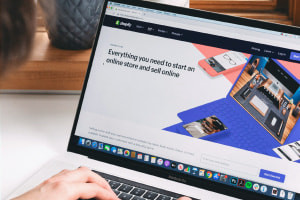 Better fit: Shopify Tutorial for Beginners For when you are considering if Shopify’s modular approach is the right baseline before diving into complex customization. Open the free course on Alison ↗
Affiliate links: CHEAPUNO may earn a commission if you buy through them, at no extra cost to you.
Other problems readers raise
Why Low Effort Listings Fail to Convert Buyers
How to find open-source e-commerce with Stripe and self-hosting?
Is open source cheaper than paid Shopify form apps?